Indigenous leaders condemn exclusion from biodiversity talks, demand land rights
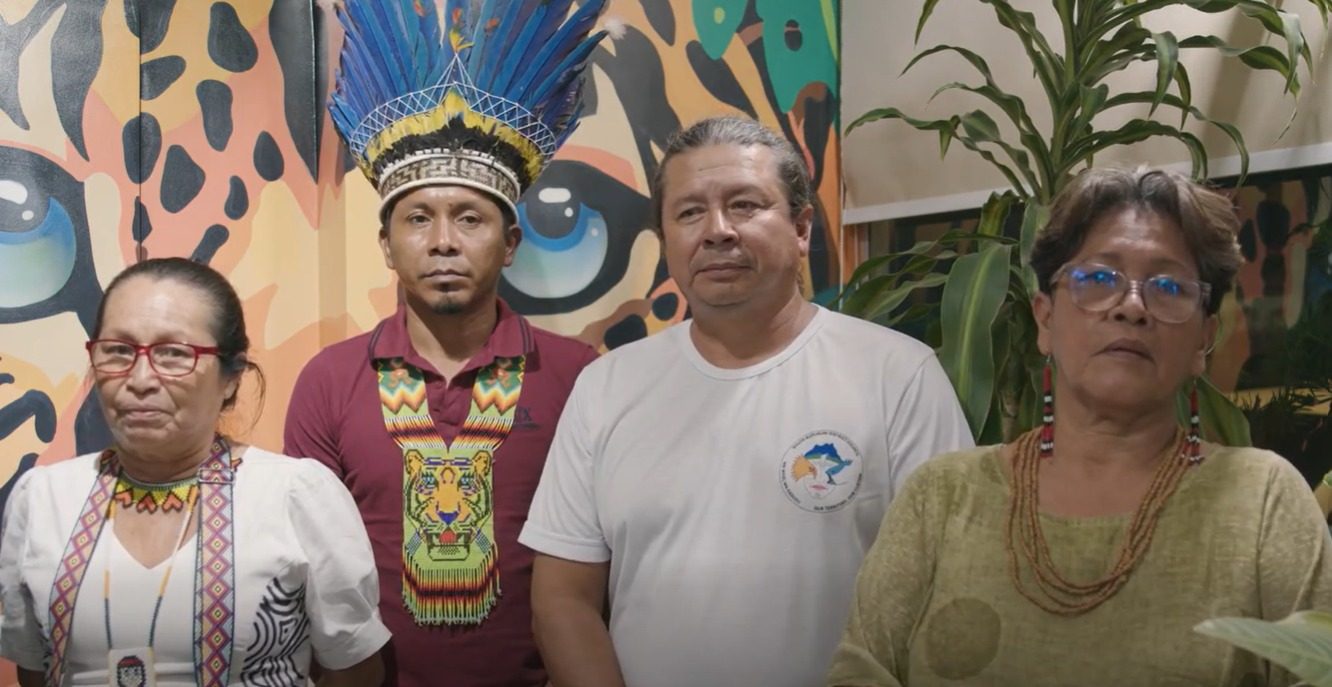
(Kaieteur News) – Indigenous leaders representing the Upper Mazaruni District Council (UMDC), the North Pakaraimas District Council (NPDC), the South Rupununi District Council (SRDC), and the Amerindian Peoples Association (APA) issued a joint statement following the conclusion of the Global Biodiversity Alliance Conference in Georgetown, raising concerns over their exclusion from international decision-making processes and the ongoing violation of their land rights.
Addressing the media and public, Alma Marshall, chair of the UMDC and Toshao of Kamarang Village, highlighted the persistent struggles Indigenous communities face regarding territorial integrity and state-driven resource extraction.
“Today I would like to make mention of the struggles that we go through as Indigenous people in the Upper Marshall District,” Marshall stated. “We have troubles with land, whereby lands are being given up for extractive activities, and I would like to say that the government of today needs to consult with the people, or with us the Indigenous people, whenever there are activities that are being taken. We would like to be a part of the decision-making processes, and the principle of free, fair, and informed consent is missing, and that is a concern to us people.”
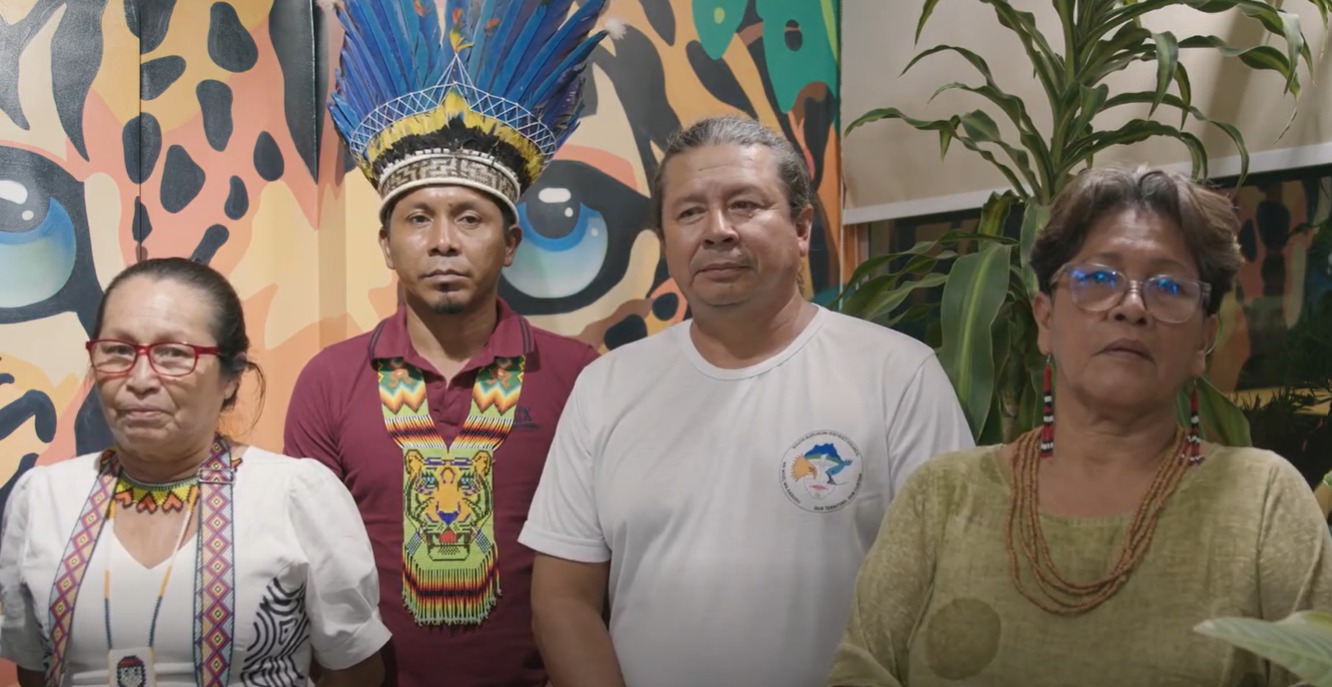
UMDC Chair and Toshao of Kamarang Village, Alma Marshall; Chair of the NPDC and Toshao of Chenapou Village, Edward McGarrell; SRDC’s Programme Manager, Kid James; and APA’s Executive Director, Jean La Rose.
Marshall pointed directly to unresolved legal disputes, noting, “We have a land case that is pending for almost 26 years, 28 years now, and we ask the state that resolution be made so that we can have full ownership of our land, and have full ownership of subsurface rights that are within our lands.” She further criticised the exclusion of traditional authorities from the high-level talks taking place in the capital: “I would also like to make mention of the present happening in Georgetown, whereby our leaders are not present to make their presentation regarding the Global Biodiversity Alliance Conference. We need to be consulted, we need to be a part of decision-making processes as people, because we’re the ones, the true custodians of the forest, and that is our concern.”
Echoing these concerns, Edward McGarrell, Chair of the NPDC and Toshao of Chenapou Village, pointed out the striking disparity between the speed at which external commercial ventures receive land approvals compared to the decades-long delays Indigenous villages face when requesting titles and extensions.
“Today I want to say that us as the Indigenous peoples of Guyana, we would like our lands to be recognized and respected by governments,” McGarrell emphasized. “It’s been too long. We’ve been making applications for demarcation and extension, and have to be waiting for years to receive it. Sometimes we do not receive it at all, but people are applying to get mining blocks, concessions, they get it within weeks, within days. This is something we want to fix as Indigenous people.”
McGarrell pushed back against narratives framing Indigenous land rights as barriers to national progress. “We are not obstacles of development. We are the true protectors of our lands, our forests, and should we be given our territory, we want our lands to be recognised as our territory, and not just these small pieces of lands, but the territory we prefer, because we are the best protectors of these lands for generations. We know that these forests that are on the land are our supermarkets. Those places we go for our medicine, our gatherings, our hunting, fishing, and I believe should these lands be given to us, it will be well protected.”
Representing the SRDC, Programme Manager Kid James stressed the deep, intrinsic connection between Indigenous identity, territorial stewardship, and global biodiversity conservation goals.
“I am Kid James, a Wapichan from the Wapichan territory in the southern part of Guyana,” James said. “Wapichanuige is where we live. Wapichanuige is what we know. Wapichanuige is what we feel. Wapichanuige is what we were, what we are, and what we will continue to be and relate to into the future. Wapichanuige is our territory.”
James called for structural changes in how governments and international environmental organizations engage with native communities. “One of the things that we have been struggling with all along is exactly what Toshao Marshall would have just mentioned. Toshao from the NPDC would have just mentioned. That is one of the biggest struggles, and as we are having a huge international gathering, it is very important that us as indigenous peoples, the custodians of huge tracts of ecosystems that are very rich in biodiversity, should be part of discussions, should be part of decisions. We are very willing to sit at that table, to share, to contribute, to make sure that the future is for the benefit of everybody, for the benefit for those who are coming behind us, for the benefit of the country, for the benefit of the world. So with this, I would like to say that as indigenous peoples, consider us as equal partners, consider open a space where we can contribute to those ongoing dialogue and discussions with the government, with the conservation bodies, with us as indigenous peoples, as those who are and are experienced and are one with nature back at our home.”
Closing the joint declaration, Jean La Rose, Executive Director of the Amerindian Peoples Association, addressed the alignment, and current contradictions, between international conservation promises and on-the-ground realities.
“Over the years, the Amerindian Peoples Association has raised numerous concerns regarding respect for indigenous land and territorial rights,” La Rose explained. “Our government has made a commitment, a 30-30 commitment for conservation. And in that, we urge our government to respect our rights to our lands and territories. Increasingly, however, we see our lands are being given away to mining companies. We see various countries are talking about how they are going to operate in our country, yet the speed at which they are granted their concessions is not the same speed at which our indigenous communities are having their various land titles rectified or having titles granted.”
La Rose emphasized that lasting solutions require direct inclusion and legislative reform. “We have numerous problems that communities have encountered through poor demarcation, sometimes through poor descriptions, sometimes through overlaps with conservation activities. And we want all of these addressed. We want them to be addressed by the communities, with the communities, in consultation with the communities, through decision-making by the communities and their leadership. And therefore, we urge the government to respect indigenous land and territorial rights. We urge the government to work with us to improve legislation governing our lands and territories, and we urge the government to do the same when it comes to policies with respect to indigenous peoples.”
As the Global Biodiversity Alliance Conference wrapped up, the collective leadership of the district councils and the APA continue to demand that future global and national policy discussions center Indigenous land rights, free prior and informed consent, and equitable representation.
Source: Kaieteur News