BoG governor says funds available to ease foreign exchange shortage but legislative constraints limit use
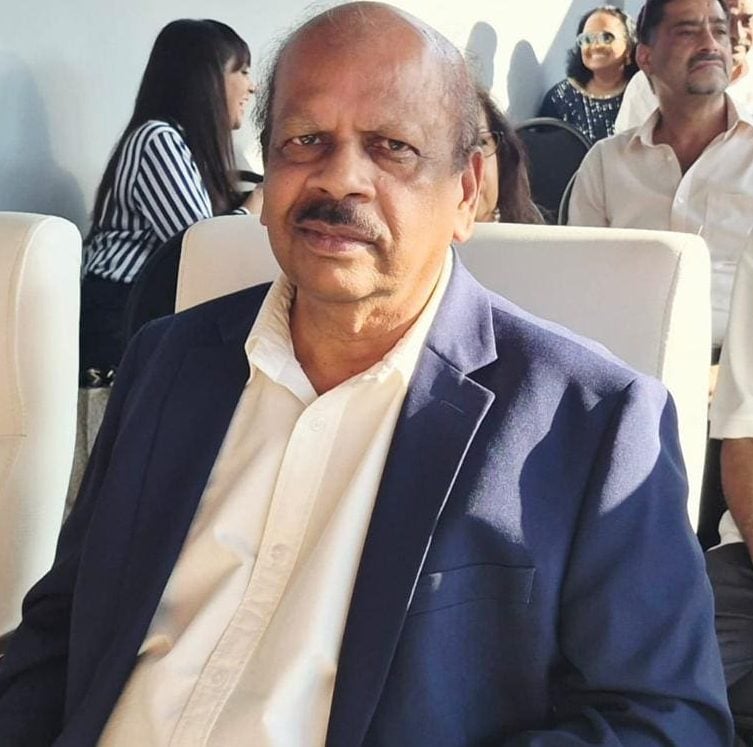
-describes demand as `unprecedented’
Bank of Guyana Governor Dr Gobind Ganga has acknowledged that Guyana continues to face significant pressure on its foreign currency supply, disclosing that while funds are available, the authorities are constrained by legislation governing how some of the money can be accessed.
Ganga spoke to Kiskadee Watch last Friday at the opening of the new Bank of Baroda headquarters at Carmichael and Quamina Streets in Georgetown. He was among the officials who arrived on time, while the event commenced approximately 40 minutes later than scheduled, following President Irfaan Ali’s arrival.
Ganga shared that there was still money available to support the foreign exchange market but warned that the authorities could not release funds indiscriminately, particularly as demand for foreign currency continued to increase.
For months now, the demand for foreign currency has been particularly significant as businesses and individuals seek US dollars to pay for goods and services. “We have never seen this kind of unprecedented demand,” Ganga said, adding that some people were also hoarding foreign currency in anticipation of further difficulties accessing it.
He nevertheless expressed confidence that the situation would eventually ease, saying authorities were examining ways of bringing additional foreign currency into the market.
He called attention to the Natural Resource Fund (NRF), explaining that although money was available, accessing additional funds was subject to parliamentary approval, which he said would only come with the next national budget.
Ganga disclosed that close to US$7 billion was available in the fund but explained that accessing the money was not a straightforward process because of the legislative requirements and safeguards intended to ensure transparency and good governance. “Although there are lots of funds around, we have constraints, legislative constraints,” he said.
He noted that the government would have to consider legislative measures to address the situation without undermining the safeguards governing the management and withdrawal of public funds. “You put safeguards and measures and everything else to ensure that there is transparency and good governance. How are you going to remove those just like that?” he reasoned.
The authorities, he said, could not simply withdraw money whenever there was pressure on the foreign exchange market as doing so could undermine the very protections put in place to ensure responsible management of the country’s resources.
Meanwhile, there have been months of complaints from businesses and individuals about difficulties obtaining US dollars through commercial banks, with some customers reporting that transactions have been delayed for weeks.
In August, Kiskadee Watch reported that a customer had waited approximately a month for a wire transfer to be processed because the bank was unable to provide the required US currency. The customer eventually cancelled the transaction and made alternative arrangements, reportedly sourcing US dollars at $238 for US$1.
In September, President Irfaan Ali acknowledged that outstanding demand for foreign currency within the banking system stood at just over US$200 million, with commercial banks carrying forward requests they were unable to satisfy.
Ali also disclosed that commercial banks purchased US$2.279 billion in foreign currency during the first six months of 2026, compared with US$1.798 billion during the corresponding period in 2025. Meanwhile, the Bank of Guyana’s foreign exchange injections increased from US$642 million to US$836 million over the same period.
Despite the increased supply, complaints about access to US dollars have persisted, with the parallel market continuing to record rates significantly above the official exchange rate.
In an October 4 report, Kiskadee Watch cited a University of Guyana Green Institute survey which placed the median parallel-market exchange rate at $238.30 for US$1 in September, compared with $236.75 in August.
Ganga did not provide a specific timeline for when customers and businesses could expect a noticeable improvement in access to foreign currency but reiterated that the authorities were looking at possible solutions.
Source: Kiskadee Watch