Guyana pushes regional collaboration on energy security, sustainability at OLACDE confab
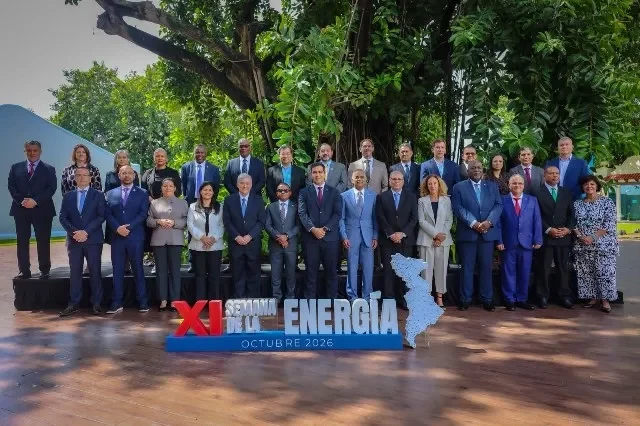
(Kaieteur News) – Prime Minister Brigadier (Ret’d) Mark Phillips has called on regional leaders to strengthen collaboration on long-term energy planning, warning that rising electricity demand, climate-related risks and technological advances will require countries across Latin America and the Caribbean to rethink how they produce and distribute energy.
Phillips made the call on Thursday, during a ministerial dialogue at the 11th Latin American and Caribbean Energy Organization (OLACDE) Energy Week in Santo Domingo, Dominican Republic, where he highlighted the need for more diversified, resilient and environmentally sustainable energy systems.
He said economic growth, industrialisation, urbanisation and digitalisation would significantly increase the region’s energy requirements in the coming years, making it necessary for governments to look beyond immediate electricity generation needs and plan for the decades ahead.
“The energy system of the next decade must be more diversified, more resilient, more efficient, more digital and increasingly low carbon,” Phillips said, stressing that regional energy planning must take into account the economies and societies countries expect to have 20 or 50 years from now.
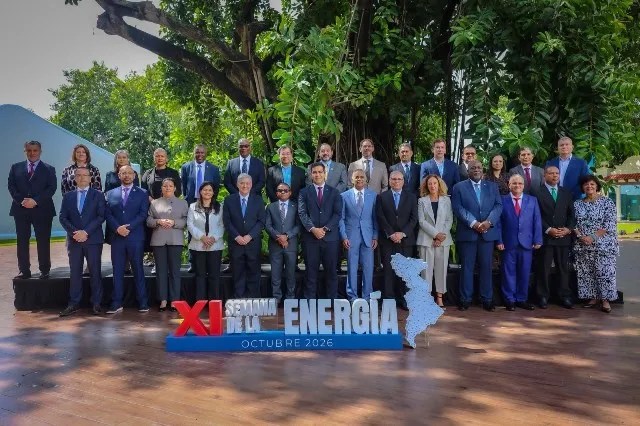
Prime Minister Brigadier (Ret’d) Mark Phillips and other officials at the OLACDE Energy Week in Santo Domingo, Dominican Republic.
The prime minister highlighted Guyana’s energy strategy as an example of efforts to balance economic development with environmental sustainability, reaffirming the government’s commitment to the Low Carbon Development Strategy (LCDS) 2030.
The strategy guides the development of a diversified energy supply incorporating natural gas, hydropower, solar, wind and other technologies.
Phillips said Guyana’s position as an emerging oil and gas producer did not conflict with its environmental commitments, noting that approximately 85 per cent of the country remains covered by forests.
“Guyana is an emerging oil and gas producer and, simultaneously, a country with approximately 85 per cent forest cover and a longstanding commitment to low-carbon development. We do not regard these realities as contradictory,” he said.
He added that the country’s responsibility was to manage its natural resources strategically and sustainably while using them to accelerate national development and transform its energy system.
Renewable energy capacity expands
Phillips reported that renewable energy projects and programmes implemented or committed between 2020 and 2026 represent investments totalling G$37.717 billion.
These initiatives, he said, have contributed to a 623 per cent increase in Guyana’s installed renewable energy capacity, from 5.35 megawatts (MW) in 2019 to 38.72 MW in 2026.
The projects include 13 utility-scale solar photovoltaic farms, 57 solar mini-grids and three hydropower plants. They also include the distribution of 37,730 solar home energy systems and the installation of 239 rooftop solar photovoltaic systems on public and community buildings.
Based on projects committed through 2031, Guyana’s installed renewable energy capacity is expected to reach 77.14 MW, almost doubling the 2026 level.
The prime minister also highlighted the role of natural gas in the country’s energy transition, explaining that it would help replace more carbon-intensive imported fuels used in electricity generation, strengthen energy security and support lower electricity costs.
He said renewable energy development and battery storage would also continue to expand as Guyana works towards a more diversified energy supply.
Digital technology and energy transition
Phillips further underscored the importance of modernising electricity grids and incorporating digital technologies and artificial intelligence (AI) into energy planning.
He said these technologies could improve demand forecasting, predictive maintenance and the overall reliability of electricity systems.
However, he cautioned that the growing use of AI and the expansion of data centres would increase electricity demand, requiring greater investment in cybersecurity, data governance and technical expertise.
On the transition to cleaner energy, Phillips stressed that expanding access must translate into tangible improvements in people’s lives, particularly in hinterland, riverine and Indigenous communities.
“We must ensure that hinterland, riverine and Indigenous communities, vulnerable households, workers and businesses are not left behind,” he said.
He called for greater access to reliable and affordable electricity, alongside investments in local employment, enterprise development, skills training and technical capacity.
Phillips also emphasised the importance of meaningful community participation in energy projects, noting that decentralised renewable energy systems were already helping to improve education, healthcare, communications, entrepreneurship and economic activity in communities.
Regional cooperation critical
Turning to regional integration, the Prime Minister highlighted the need for continued collaboration through OLACDE to address common energy challenges and develop solutions that benefit countries across Latin America and the Caribbean.
He pointed to innovative financing, climate-resilient infrastructure and the expansion of energy interconnection, where feasible, as important areas for cooperation.
Phillips reaffirmed Guyana’s commitment to working with regional partners to advance a shared energy agenda that supports economic transformation while protecting the environment and improving livelihoods.
His remarks underscored the importance of long-term planning and regional partnerships as countries seek to meet growing energy needs while building systems capable of withstanding climate risks and adapting to technological change.
Source: Kaieteur News